Most companies are unaware of team training programs that solve problems before they arise. We’ll show you how to change that.
When Anna, HR Director of a medium-sized tech company, receives the latest employee survey results, she feels a knot in her stomach. The figures are solid, the company has qualified specialists, modern tools, and clear processes. And yet, comments such as the following appear more and more frequently:
Anna knows her employees' profiles. They have plenty of certificates, further training, and professional expertise. What's missing is something else: genuine team development. The ability to understand each other within the team, communicate openly, share responsibility, tolerate uncertainty, and resolve conflicts constructively.
In many companies, this is the reality. And it clearly shows why soft skills, and thus targeted team development and professional team training, are no longer just “nice to have” but a strategic success factor for collaboration, culture, and corporate success.
Why Soft Skills are Crucial for Modern Organizations
Soft skills represent the operational side of team development in a corporate context. While individual personality development focuses on inner attitude, self-reflection, and personal growth, the impact of this development is evident where collaboration actually occurs: in conversations, meetings, projects, conflicts, and decisions.
This is why team development and personality development are closely linked. Teams only function well in the long term if each individual has basic communication and social skills. Conversely, individual soft skills only really come into their own when working as part of a team. This is where the individual basis that makes teams capable of working, dealing with conflict, and innovating comes into play.
In a working world characterized by uncertainty, complexity, and rapid change, the quality of these skills determines whether strategies are effective in everyday life or remain theoretical. Teams that communicate clearly, resolve conflicts constructively, and share responsibility are faster, more resilient, and more innovative.
Moving Away From the Conceivable
In the past, defining and consistently implementing a stable process was enough to ensure success. Today, however, markets, technologies, and customer expectations are changing in ever shorter cycles. Teams work in an agile, interdisciplinary, and often remote manner. Decisions must be made faster, more iteratively, and under conditions of uncertainty.
In this environment, skills such as inner stability, strong communication skills, conflict management, and joint decision-making become decisive success factors. Flexible working models, hybrid working, and self-organized teams sound promising. At the same time, they require a high degree of self-management, trust, and responsibility in working together.
Without targeted team development, these very freedoms can become overwhelming. Teams may be theoretically “empowered,” but in practice they are often not prepared to share responsibility, resolve conflicts constructively, or organize themselves. For team development to find its place in corporate strategy, a clear stance is needed. Not “We'll do something about soft skills too,” but rather:
“We anchor team development as a strategic development area in HR and L&D.”
Soft skills, just like technology, brand, or data, are becoming a real strategic asset and a key lever for the future viability of an organization.
From Traditional Training to a Modern Learning Culture
Traditional training courses usually followed a linear principle: lecture, theory, model, checklist, certificate. However, knowledge transfer alone does not bring about behavioral change, let alone personal development. Modern learning culture follows three principles:
Learning is a Never-ending journey, not a one-off Event
Team development is not achieved in a half-day workshop or a one-off seminar. Teams develop through:
- Frequent reflection loops
- Shared experiences
- Structured feedback
- Repeated practice in realistic situations
Modern L&D strategies therefore combine workshops with digital learning paths, microlearning impulses, coaching elements, and immersive simulations that bring soft skills and team dynamics to life.
Learning is Experience-based
People and teams develop when they feel, apply, reflect, and try things out. That's why leading companies such as 3spin Learning are increasingly focusing on:
- Role-playing and team exercises
- Real-life scenarios from everyday work
- VR training for conflict discussions, feedback situations, or cooperation challenges
- Joint reflection rooms, peer dialogues, and mentoring
Teams learn most effectively when they experience the effects of their behavior and can actively try out new courses of action.
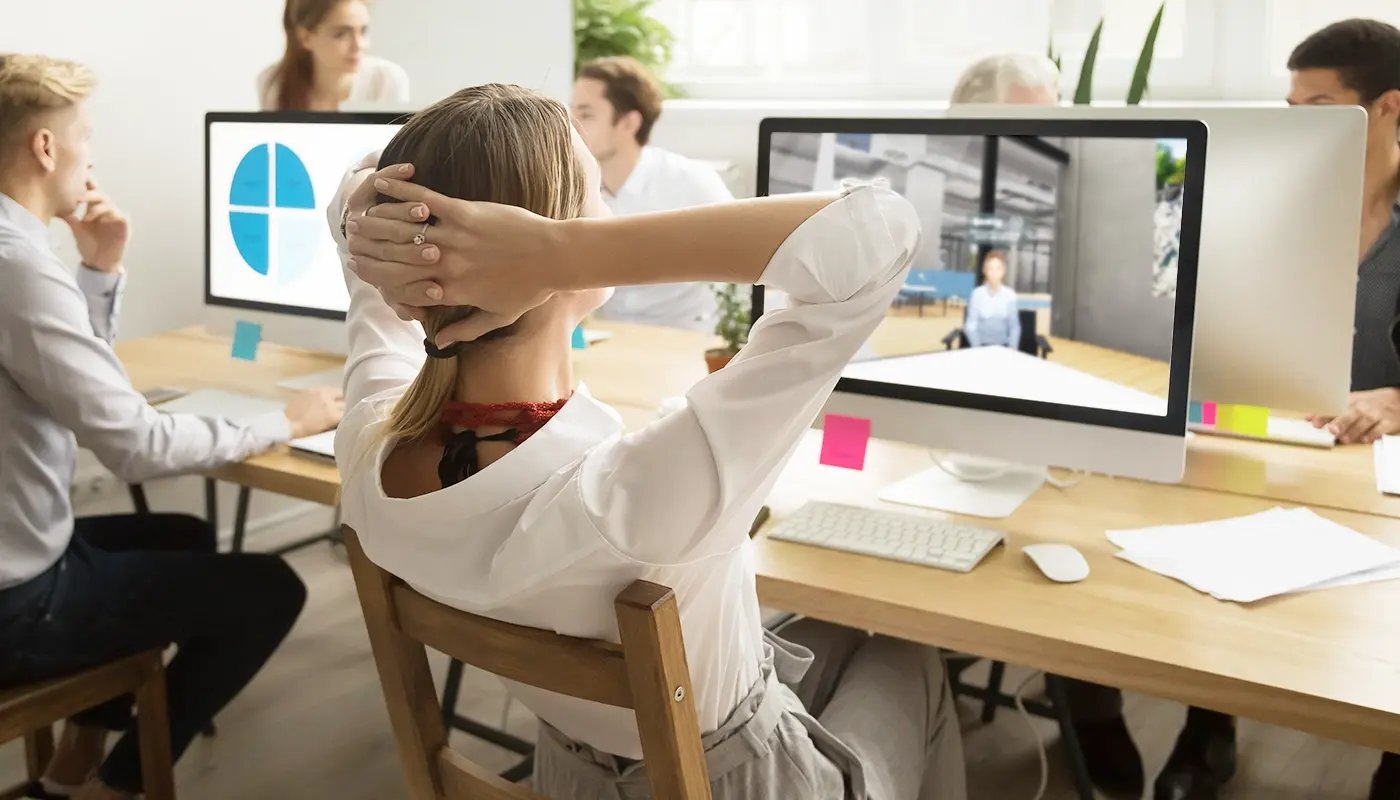
Team development with AI avatars
Learning is Both Emotional and Social
Team development arises from experiences that trigger something: clarity, irritation, moments of realization, changes in perspective. The more intense the emotional involvement, the more sustainable the development. Immersive formats create precisely these emotional learning moments. They make collaboration tangible and enable teams to recognize patterns, clarify roles, and consciously change their communication.
This is how sustainable team development happens: not through theory, but through shared experience.
Team Development Workshops: Goals & Impact
Team development workshops are now among the most effective measures in the HR and L&D portfolio. They create safe spaces for teams to reflect on their own interactions, gain new perspectives, and make lasting changes to their behavior. For companies, they are a strategic tool for strengthening collaboration, identifying conflicts early on, and measurably developing team culture.
Self-reflection as the Basis of all Team Development
Effective team development does not begin externally, but internally. People need to understand what patterns they bring to team dynamics, what their strengths are, where their blind spots lie, and how they affect others. Without this clarity, no real change can take place.
Workshops offer a safe, moderated setting for this. They enable teams to talk openly about collaboration, expectations, needs, and tensions, thereby building a common understanding.
Modern Team Workshop Strategies
Modern workshops use a wide range of methods to develop teams holistically:
- Personality models such as Big Five, DISC, or values work to make differences visible and usable
- Feedback formats such as peer feedback or 360° approaches that make team perceptions transparent
- Reflection exercises, journaling, and coaching questions that promote self-reflection and personal responsibility
- VR or scenario training that provides realistic experiences of complex team and communication situations
These strategies combine knowledge, emotion, and practice. This is precisely the combination that makes team development effective.
What Makes Modern Soft Skill Training Courses so Effective
Communication is the most visible form of team development and, at the same time, the most common stumbling block in companies. Workshops enable participants to not only understand communication and conflict situations in theory, but also to practice dealing with them in a practical setting.
How Workshops Improve Team Dynamics
Successful team development workshops strengthen individual employees as well as change the dynamics of entire teams. It creates a common understanding and a uniform vocabulary for collaboration, so that everyone involved has the same terms, expectations, and communication patterns. This creates psychological safety. People open up more easily, give honest feedback, and share challenges without fear of negative consequences.
At the same time, conflicts become visible earlier because tensions are addressed before they escalate. This enables teams to solve problems constructively and quickly clear up misunderstandings. In addition, a stronger focus on strengths leads to better use of resources. Employees work to their full potential, teams become more efficient, and satisfaction increases noticeably.
Shared experiences bring teams closer together and promote a culture in which constructive cooperation is a matter of course.
Impact on Employee Experience
Companies that systematically promote team development create:
- A modern learning culture attracting talent
- A trusting atmosphere that unleashes energy
- An appreciative leadership culture that empowers people
- Work environments that enable development rather than hinder it
For HR leaders and L&D, this implies that these workshops are not just training sessions, but experience design. They shape how employees perceive a company and whether they stay.
Deploying Digital Learning Platforms
Digital learning platforms offer a wealth of benefits for team development. They are particularly effective because they:
- Enable learning anytime, anywhere
- Provide content in a modular format
- Integrate microlearning into everyday life
- Encourage reflection and repetition
Typical components of digital soft skill programs are:
Why Immersion Redefines Team Development
Immersive learning technologies such as virtual reality are particularly effective because they trigger profound emotional responses, which is precisely the key to sustainable soft skill development. In a VR simulation with an angry colleague, the learner feels the situation immediately. It is not a theoretical “imagine...” scenario, but a real experience that reveals stress, empathy, and communication patterns. This emotionality ensures that learning content is understood AND internalized.
At the same time, VR training offers a completely safe space in which difficult conversations, conflicts, or leadership moments can be repeated as often as desired. Employees test different strategies, experiment with new behaviors, and are allowed to make mistakes without negative consequences. This reduces inhibitions while increasing self-confidence and decision-making skills.
Another advantage is the high consistency of the training. All employees experience absolutely identical scenarios, with the same conversation partners, emotional reactions, and framework conditions. This makes VR an ideal solution for global teams and large organizations that want to ensure uniform quality standards.
In addition, VR enables objective, data-based feedback. Reactions, timing, conversational behavior, and even nonverbal signals can be recorded and evaluated. This makes team development measurable.
Last but not least, the cost efficiency is impressive. VR training can be rolled out worldwide, regardless of location, trainer capacity, or complex logistics. Once created, immersive training can be scaled and reused again and again with a high return on learning investment.
This is exactly where 3spin Learning steps in. We create immersive experiential spaces that make team development tangible and soft skills trainable. Typical application scenarios range from conflict resolution and difficult conversations to performance and presentation training, leadership situations, stress regulation, and empathy training through perspective shifting. Immersion brings reality into the learning process, accelerating team development in a way that simply cannot be achieved with traditional training methods.
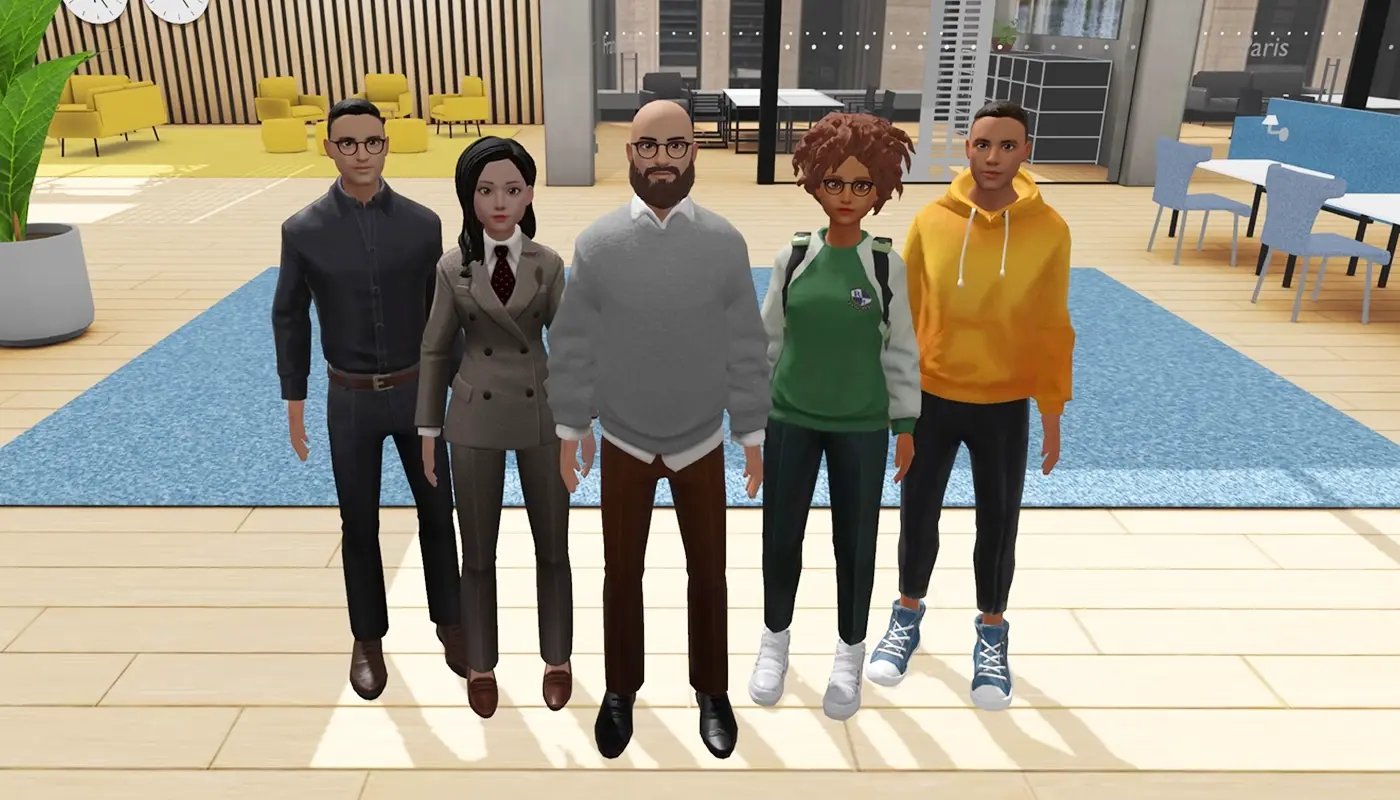
A selection of our AI coaches
Modern Teaching Tools for Sustainable Soft Skill Development
Modern learning strategies, therefore, rely on a learning ecosystem that combines workshops, digital formats, and immersive learning technology. The aim is to make learning more emotional, tangible, and sustainable, thereby enabling team development to reach a new level.
Interactive and Experience-based Workshop Formats
Experience-based learning is the driving force behind all team development. Soft skills cannot be taught using slides, lectures, or checklists. They are developed through action, experience, and reflection. Modern workshops use interactive, dynamic formats.
For businesses, the advantage is that soft skills become ingrained in behavior rather than just understood.
Choosing the Right Workshop for HR and L&D
Choosing the right team development workshop is a key strategic decision for HR and L&D. Not every training course automatically leads to real behavioral change; many measures fizzle out if they are not embedded in a holistic learning and corporate culture. Modern HR therefore views team development as a business investment. The decisive factor is not which interventions actually promote the behavioral changes that the company needs in order to successfully shape transformation, growth, and cultural development.
1. Clear Goal Definition
The first step is to clearly define objectives and conduct a thorough skills analysis. Companies need to understand the challenges they face, such as digitalization, cultural change, restructuring, growth in new markets, or focussing on AI. These conditions give rise to specific behaviors that teams and managers will need in the future.
2. Skills Analysis
At individual level, a systematic skills analysis helps to identify actual development needs:
Which soft skills are already well developed? Where are there patterns of conflict, stress points, or uncertainties? Tools such as 360° feedback, personality models, team assessments, or VR-based skill analyses provide valuable insights and create acceptance for upcoming learning processes.
3. Clear Learning Objectives
The results can be used to define clear learning objectives, particularly at the behavioral level. This is precisely where genuine team development begins.
4. Selecting Suitable Trainers
Choosing the right trainers and teaching concepts is another key to success. Team development is a sensitive area that requires psychological safety, experience with group dynamics, and a deep understanding of emotional learning processes. Trainers should share their knowledge and coaching skills, bring in real-world business contexts, and use experience-based methods.
Behavioral design, practical scenarios, reflection loops, and a safe learning space are indispensable. Trainers who integrate hybrid or immersive learning formats are particularly effective, because modern learning no longer takes place exclusively in the seminar room.
5. Learning Journeys
For workshops to have a lasting impact, they must be part of a larger learning journey. Individual training sessions often only generate short-term “aha” moments, while integrated learning journeys enable real behavioral change. Structured pre-learning creates motivation and context, while the workshop itself offers intensive experiences, exchange, and reflection. However, the crucial part comes afterward.
Post-learning formats such as microlearning, peer learning, coaching sessions, VR training with repeat scenarios, or regular reflection prompts anchor new behaviors in everyday life. If these measures are also embedded in HR processes such as performance dialogues, feedback cycles, leadership programs, or talent development, an effective learning ecosystem is created that permanently anchors team development in the company.
6. Performance Evaluation
Finally, measuring success plays a key role. Modern HR teams make team development measurable in terms of both quality and quantity. KPIs such as team climate, communication quality, psychological safety, feedback frequency, conflict dynamics, and retention rates provide insight into the effectiveness of measures. In addition, there are measurement methods such as before-and-after analyses, 360° feedback cycles, pulse surveys, VR-based behavioral analyses, and structured self-assessments. The follow-up process is particularly important: without regular repetition, reflection, and application, any learning success will fizzle out. With systematic follow-ups, team development becomes a permanent learning curve and thus a real competitive advantage.
Ultimately, there is a clear principle that team development only works if it is strategically thought out, sensibly orchestrated, and consistently supported. HR and L&D departments that take these principles to heart shape the culture, behavior, and future viability of their company.
Bottom Line: Soft Skills as a Strategic Competitive Advantage
Team development is now one of the key factors for resilience, innovation, and sustainable collaboration in modern organizations. Organizations that systematically incorporate team training strengthen their employees' communication and conflict management skills, as well as their overall corporate culture, leadership culture, and organizational adaptability.
When HR and L&D understand team development as a strategic area of development and intelligently combine modern learning methods, a clear competitive advantage emerges. Teams that strengthen each other, communicate transparently, resolve conflicts constructively, and take responsibility together.